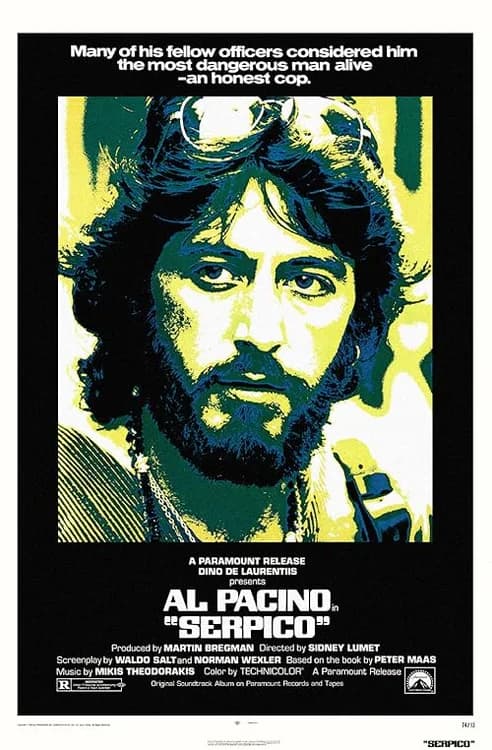
About Serpico
Serpico stands as one of the most powerful police dramas ever made, anchored by Al Pacino's electrifying performance as real-life NYPD officer Frank Serpico. Directed by Sidney Lumet with gritty authenticity, the film follows Serpico's moral journey through a corrupt police department where bribery and payoffs are standard practice. As he refuses to participate in the systemic corruption, Serpico becomes increasingly isolated, facing hostility from fellow officers who view his integrity as a threat to their lucrative arrangements.
The film's strength lies in its nuanced portrayal of institutional decay and one man's lonely stand against it. Pacino completely embodies the role, capturing Serpico's idealism, frustration, and eventual paranoia as he navigates a system designed to crush whistleblowers. Lumet's direction creates a palpable sense of New York City's grimy 1970s atmosphere, making the corruption feel both specific to that era and timeless in its relevance.
What makes Serpico essential viewing is its exploration of integrity in the face of overwhelming pressure. The film doesn't just depict corruption but examines how systems protect themselves and punish those who challenge them. The supporting cast, including John Randolph and Tony Roberts, provides excellent counterpoints to Pacino's increasingly isolated protagonist. For anyone interested in true crime stories, police procedurals, or character studies of moral courage, Serpico remains a masterclass in biographical filmmaking that continues to resonate decades after its release.
The film's strength lies in its nuanced portrayal of institutional decay and one man's lonely stand against it. Pacino completely embodies the role, capturing Serpico's idealism, frustration, and eventual paranoia as he navigates a system designed to crush whistleblowers. Lumet's direction creates a palpable sense of New York City's grimy 1970s atmosphere, making the corruption feel both specific to that era and timeless in its relevance.
What makes Serpico essential viewing is its exploration of integrity in the face of overwhelming pressure. The film doesn't just depict corruption but examines how systems protect themselves and punish those who challenge them. The supporting cast, including John Randolph and Tony Roberts, provides excellent counterpoints to Pacino's increasingly isolated protagonist. For anyone interested in true crime stories, police procedurals, or character studies of moral courage, Serpico remains a masterclass in biographical filmmaking that continues to resonate decades after its release.