About The 400 Blows
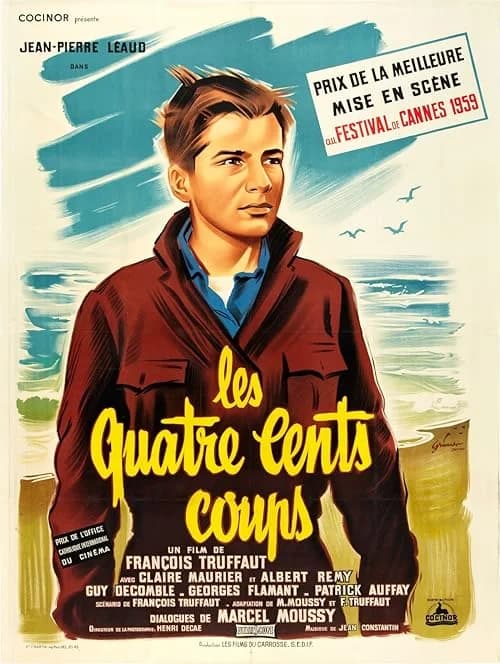
François Truffaut's groundbreaking 1959 film The 400 Blows (Les Quatre Cents Coups) remains a cornerstone of French New Wave cinema and a profoundly moving portrait of adolescence. The film follows 12-year-old Antoine Doinel, a sensitive boy neglected by his self-absorbed parents and misunderstood by the rigid educational system in post-war Paris. As Antoine seeks escape from his unhappy home and school life, he drifts into minor acts of rebellion and petty crime, setting him on a collision course with authority that culminates in his heartbreaking institutionalization.
Jean-Pierre Léaud delivers one of cinema's most authentic child performances as Antoine, bringing a raw, unvarnished vulnerability to the role that feels startlingly real even decades later. Truffaut's direction is both intimate and revolutionary, employing location shooting, naturalistic dialogue, and a semi-autobiographical approach that blurred the lines between fiction and personal memory. The film's famous final freeze-frame on Antoine's uncertain face at the sea's edge has become an iconic image of youthful ambiguity and longing.
Viewers should watch The 400 Blows not just as a historical artifact but as a timeless exploration of childhood alienation. Its themes of institutional failure, the search for identity, and the crushing weight of societal expectations resonate powerfully today. Truffaut's compassionate, unsentimental approach creates a deeply human story that avoids easy moralizing, instead presenting Antoine's journey with empathy and clarity. For anyone interested in cinematic artistry, character-driven drama, or the origins of modern filmmaking, this masterpiece offers an essential and emotionally rewarding viewing experience that continues to influence filmmakers worldwide.
Jean-Pierre Léaud delivers one of cinema's most authentic child performances as Antoine, bringing a raw, unvarnished vulnerability to the role that feels startlingly real even decades later. Truffaut's direction is both intimate and revolutionary, employing location shooting, naturalistic dialogue, and a semi-autobiographical approach that blurred the lines between fiction and personal memory. The film's famous final freeze-frame on Antoine's uncertain face at the sea's edge has become an iconic image of youthful ambiguity and longing.
Viewers should watch The 400 Blows not just as a historical artifact but as a timeless exploration of childhood alienation. Its themes of institutional failure, the search for identity, and the crushing weight of societal expectations resonate powerfully today. Truffaut's compassionate, unsentimental approach creates a deeply human story that avoids easy moralizing, instead presenting Antoine's journey with empathy and clarity. For anyone interested in cinematic artistry, character-driven drama, or the origins of modern filmmaking, this masterpiece offers an essential and emotionally rewarding viewing experience that continues to influence filmmakers worldwide.